Col Jasjit Singh Gill (veteran)

In an era, increasingly dominated by self-preservation, careerist calculations and material comfort, a veteran like me often wonders, where does a society get its moral steel in the teeth of statecraft failure?
When we look at Punjab’s tragic and ongoing struggle against the poison of the drug mafia (institutional inertia, administrative paralysis and systemic corruption), we sometimes witness such courageous acts (which cause an entire society to pause) – there have been two supreme sacrifices in recent times by Mrs. Neha Shourie, Zonal Licensing Authority Kharar, and Parvinder Singh Jhota, the brave anti-drug activist of Mansa (both were gunned down at the barrel of the illicit drug-selling chemical mafia).
Though separated by years and different walks of life, their lives ended at the barrel of a gun wielded by the illegal drug-selling chemical mafia. The brave Neha Shoree was shot in broad daylight inside her office. Parvinder Singh Jhota was gunned down on camera while exposing the illegal sale of medical intoxicants that police and local administration had turned a blind eye to.
Look at the lineage behind these two souls:
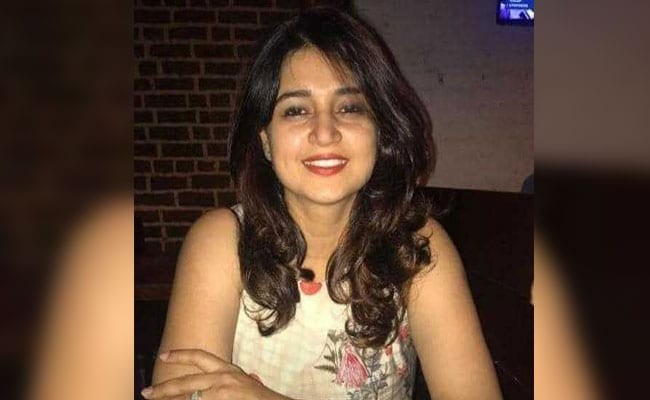
Neha Shourie was the daughter of Capt Kailash Shourie and Mrs. Shourie, a dedicated school teacher.
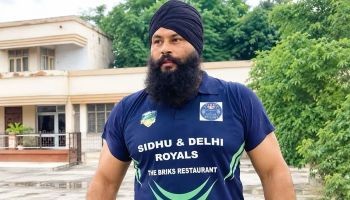
Parvinder Singh Jhota was the son of Sepoy Bhim Singh of Mansa
Parvinder’s grief-stricken father even says that he stood ready to take a bullet to continue his son’s crusade.
Is it a coincidence? Or is there a subtle, unyielding ethos that is passed down at the dinner tables of soldiers’ homes?
The Architecture of the Soldier’s Hearth
When a child grows up in the soldier’s household, patriotism is not a slogan chanted on national holidays; it is ambient air, absorbed through everyday observations.In the military household, the child learns that:
- Duty is non-negotiable, Orders are executed, and responsibility is accepted without a second thought and without asking convenience.
- Personal sacrifice is the norm, A soldier stands where others step back, honor is more valued than physical longevity.
- Moral clarity precedes self-interest, There is no middle ground between right and wrong when national wellbeing is at stake.
Neha could have taken the path of least resistance (a path chosen by many bureaucratic types who sign-off on compromised licenses, or turn a blind eye , accept a hefty bribe or even seek a quiet transfer to safeguard their comfortable lives) – but instead, she stood her ground against the illicit pharmacy networks, canceled tainted licenses, and refused to compromise (knowing the risks, yet her conscience was unbending).
Parvinder Jhota could have minded his own business, looked after his personal career, and turned a blind eye while the drug mafia destroyed the youth of the neighborhood – but he, raised by a Sepoy, had in him the soldier’s refusal to surrender ground to an enemy, and he stepped directly into the breach, using personal leadership and courage to confront the medical nasha mafia (knowing he faced a compromised ecosystem and mortal danger).
Uncompromising Moral Steel in a Materialistic World
What we are witnessing in the wards of ex-servicemen is a three-fold realization:
- Awareness, they do not live in ivory towers, but have an acute awareness of the social decay, rot, and existential threats facing their people.
- Principled Conduct, they refuse to compromise on core principles no matter how lucrative the bribe or heavy the political pressure.
- Fearless Action, they carry out their calling with personal leadership, knowing that doing the right thing may cost them their lives.
This is not an accidental parenting, but the natural continuation of the military discipline translated into civilian citizenship. What our armed forces imbue in the soldiers during operational service – the value of Naam, Namak, Nishan – does not evaporate upon retirement, but it breathes through the parenting sermons and the moral compass handed down to the next generation.
Political Apathy
It is notable that many have lost their lives in the fight against drugs and sand mining earlier too, yet, there was no reaction from the political parties. Now, politicians of all parties are making as bee-line for the rersidence of Parvinder Singh. Suddenly, this murder has engineered a political stampede. Such political initiatives reek of insensitivity and crassness, considering that the perceived motive is the upcoming elections.
The aforementioned argument gets substantiated by the fact that in the case of Neha Shoree’s gruesome murder, even after years of seeking justice, her parents have been left to run from pillar to post. Successive governments and political parties across the political spectrum have heard their pleas, yet the family appears to have received neither meaningful support nor the justice it has sought.
Here some uncomfortable questions are raised – is justice for an ordinary citizen’s family less important unless powerful interests are involved? The silence and inaction of those who could have helped isas disturbing as the crime itself.
The Hope that Sustains Us
When the news of Jhota’s murder reached me, as a soldier, I felt both great grief and a sense of national pride. In an era where materialism dictates choices, these young men and women show us that a segment of Indian society is fiercely, unconditionally patriotic.
Governments may fail, and enforcement systems may falter under the weight of political pressure and bribery, but as long as soldiering households continue to raise children who value national duty over self-preservation, the soul of our nation remains undefeated. Neha Shourie and Parvinder Singh Jhota did not just fight a drug mafia – they showed what it meant to be a soldier’s child.