Jaibans Singh
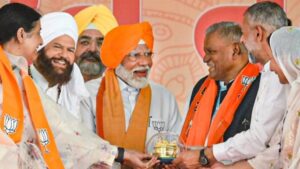
Professor Harjeshwar Pal Singh is a Punjabi scholar, historian and academician. He is serving as an Assistant Professor of History in Sri Guru Gobind Singh College, Sector 26, Chandigarh. He occasionally addresses political and social topics related to Punjab through articles and media debates. His views find acceptance with prominent magazines and journals of a particular category.
Professor Harjeshwar Pal Singh has recently written an article “The Rise and Limits of BJP in Punjab.” The article is available on social media and is being circulated widely.
The article derives importance from the issues raised which mainly conclude that the BJP has been unable to find a footing in Punjab. He has also articulated reasons for the same. The article is of significance since it opens avenues for further debate on many matters that are of political consequence to Punjab.
In this article, Jaibans Singh has given para-wise comments on the perceptions articulated by Professor Harjeshwar Pal Singh in his aforementioned article. Jaibans Singh has done so with the intention of giving a different perspective. It is noted here the views of both authors are their own and not related to the policy of any political party.
The Rise and limits of BJP in Punjab
Harjeshwar Singh – In Punjab’s political discourse, few assumptions circulate as casually, and with as little scrutiny, as the claim that the RSS–BJP combine is steadily spreading its tentacles across the state. According to this widely held belief, RSS Shakhas are proliferating, Sikh religious institutions are increasingly falling under Sangh influence, and rival political formations—from the Shiromani Akali Dal to the Aam Aadmi Party and the Congress—are portrayed as either accommodating or surrendering to Hindutva in pursuit of power. The 2020 rupture between the Akalis and the BJP, followed by the BJP’s improved electoral performance since 2022, the fragmentation of Panthic politics, and the rapid decline of the Sukhbir Badal led Akali Dal are routinely marshalled as evidence of this inexorable rise.
Jaibans Singh – The professor is advocating scrutiny of what he terms as a “widely held belief” that the RSS-BJP combine is spreading its “tentacles” across Punjab to the extent of influencing huge institutional organizations like the SGPC and political organizations like the Congress, AAP and Congress. The evidence provided to support the claim is quite flimsy.
If credence is given to the rather tenuous claims made by the professor then the RSS and the BJP have a lot to be happy about. The RSS is a social organization and the BJP is a political organization. Their professional structure demands that they attempt to spread their influence not only nationally but globally too. If there are institutions that wish to join hands on the basis of a shared ideology or interests what is wrong with that? The accusatory tone of the professor is unfounded as is that of all others who attempt to sit on a high moral threshold while articulating the rise of the BJP in Punjab.
Harjeshwar Singh – This reading of Punjab’s politics often culminates in a familiar conclusion: that the Modi–Shah juggernaut is unstoppable, and that the BJP stands on the brink of a breakthrough, or even victory, in Punjab by 2027. Running parallel to this is an even more sweeping assumption: that Punjab’s Hindu population constitutes a homogeneous political bloc, instinctively aligned with the BJP irrespective of differences of class, region, occupation, or historical experience.
Jaibans Singh – The BJP does not consider Modi-Shah to be a juggernaut. They are normal Karyakartas (workers) of the party who are performing the duty vested upon them to the best of their ability and succeeding too. The juggernaut is a perception of the opposition.
Politicians understand vote politics and alliances better than academicians. Not only the BJP but every other political party active in Punjab knows the psyche of the Punjabi Hindu. Nobody looks upon the community as a “homogeneous political bloc.” It is well understood that there will be a fight for every single vote. These cobwebs are in the mind of the professor and others like him.
Harjeshwar Singh – Yet a closer examination of Punjab’s political history, social structure and cultural ecology complicates this narrative considerably. Punjab has long been characterised by layered identities, strong regionalism, and a political culture shaped as much by agrarian movements and federal assertion as by religious affiliation. Hindu political behaviour in the state has historically been fragmented, shaped by urban–rural divides, trading communities, caste hierarchies, and distinct regional histories rather than by a singular ideological pull. Likewise, the influence of the Sangh Parivar within Sikh religious institutions remains uneven, contested, and often overstated, constrained by the autonomy of Panthic traditions and a deep-rooted suspicion of external ideological control.
Jaibans Singh – In agreement with the articulations.
Rise of the BJP in Punjab.
Harjeshwar Singh – Since 2014, the Bharatiya Janata Party’s grip over Indian politics has increasingly been described as a “New One-Party Dominance System,” echoing—though not replicating—the Congress-led order that prevailed from 1947 to 1989. Unlike the Congress era, which drew legitimacy from the freedom movement, pluralism and broad organisational consensus, the BJP’s dominance rests on a different foundation: Narendra Modi’s personal charisma, tight narrative control, strategic polarisation, institutional consolidation and a vast welfare-delivery apparatus. Together, these have turned the party into an electoral juggernaut, capable of winning three successive general elections.
Jaibans Singh – The author gravely underestimates the maturity and enlightenment of the Indian voter. The Congress resorted to vote-bank politics based on appeasement of identified communities and division of the Hindu vote. The regime fell not as mush due to its divisive politics as due to decades of corruption and mismanagement. The BJP has a committed cadre, inherent party discipline and a well-articulated social and political philosophy. It is unwilling to shed its core principles for the sake of politics. It does have a “vast welfare-delivery apparatus” which is directed towards improvement of the quality of life of the people and a well-structured march towards economic development and national security. The people are reposing trust and confidence in the committed policies of the party, more so since the opposition is failing in its duty to articulate a credible alternative. Political domination is the objective of all political parties, it would be unfair to give it a self-serving sheen while speaking of one organization.
Harjeshwar Singh – Punjab, long viewed as inhospitable terrain for the BJP, is now emerging as an important testing ground for this dominance. After its 2020 split with the Shiromani Akali Dal over the farm laws, the BJP embarked on a determined effort to expand its presence in the state. The gains, while uneven, are significant. The party’s vote share has climbed from 6–7 per cent to around 18.5 per cent, and in the 2024 Lok Sabha elections, it secured the highest vote share in 23 Assembly segments, indicating a structural shift rather than a one-off surge.
Jaibans Singh – BJP is too mature a party to get into a “testing ground mode” with any state of the country, least of all a border state as sensitive as Punjab. The party looks at Punjab like any other state of the country that has the right to enjoy the fruits of development under its superior policy umbrella. The increase in vote share is an acceptance by the people of Punjab of the policy and sustainability of the BJP.
Harjeshwar Singh – A central plank of this expansion has been elite induction. The entry of figures such as former Chief Minister Captain Amarinder Singh, Sunil Jakhar and Manpreet Singh Badal reflects a strategy of hollowing out rival parties while compensating for the BJP’s limited grassroots organisation in Punjab. This approach mirrors a national pattern in which the BJP functions less as a cadre-building force and more as a pole of attraction for politically displaced regional elites.
Jaibans Singh – Naturally the BJP could not have fructified its decision to create a Pan-Punjab presence on the shoulders of its small leadership and cadre strength, that was meant to serve its earlier political position as a junior partner active in about 20 percent of the total seats in Punjab. In military terms it is called the creation of “boots on ground.” It is a wonder that academicians speak of this natural organizational progression as something evil. Such an articulation is the product of a structured narrative against the BJP.
Those who joined are mature, experienced leaders who were quicker in the uptake of what their state actually requires and which party is best suited to provide the same. They came voluntarily, were welcomed in the party fold, and are working relentlessly for the good of the party and the state.
Harjeshwar Singh – At the same time, the party has sought to soften its image among Sikhs, a community traditionally wary of the Sangh Parivar. Through the induction of Sikh leaders like Manjinder Singh Sirsa and the projection of religious commemorations such as Veer Bal Diwas and the martyrdom of Guru Tegh Bahadur, the BJP is attempting long-term image correction, particularly among urban and middle-class Sikhs.
Jaibans Singh – The BJP looks upon all castes and cultures in the Indian mosaic with respect and reverence. It remained in alliance with a regional Panthic party (SAD) for more than two decades only to preserve this respect and reverence. It has no need to make a special attempt to “soften its image among Sikhs” since there is already a deep bond between the party and the Sikh community, not only in Punjab, but across the country and abroad where Sikhs have significant clusters of habitation and are important members of the society. BJP is reaching out to the constituency with its policies and schemes as any political party should.
Harjeshwar Singh – Social engineering remains another key axis. Borrowing from its “cow belt” playbook, the BJP has actively courted non-dominant caste groups such as Balmikis, and Sainis, often deploying Haryana Chief Minister Nayab Singh Saini in Punjab. The aim is to bypass the state’s entrenched Jat Sikh-centric political structure and assemble a new coalition rooted in welfare, grievance and aspiration.
Jaibans Singh – It is astounding that an academician of note would even feel that a party like the BJP would fail to understand the presence and importance of the various segments that constitute the political entity of a region. The author does not even understand that the Saini community (to which CM Haryana belongs) has a predominant agriculture base in Punjab.
Harjeshwar Singh – The party has also engaged Punjab’s influential Dera networks, including Dera Sacha Sauda and Radha Soami, seeking access to socially marginalised voters outside conventional party structures.
Jaibans Singh – All political parties and individual politicians globally seek the blessings of saints and religious leaders. The BJP is reaching out to the complete Sant Samaj in Punjab and rightly so. The party wishes to learn from them about the needs of Punjab and also seek their blessings and guidance.
Harjeshwar Singh – Parallel to this outreach is a relentless attack on the ruling AAP over law and order, gangsterism, drugs and stalled development. By projecting the “Yogi model” and the promise of a “double engine sarkar” and benefit of “central schemes” the BJP presents central alignment and muscular governance as the cure for Punjab’s malaise—an argument that resonates with sections of the urban middle class, even as it challenges the state’s tradition of negotiated and plural politics.
Jaibans Singh – What else is the job of a responsible opposition in a democracy? The BJP is constantly pressuring the AAP led Government of Punjab towards fulfilling its electoral promises to the people and to give good governance while it is in power. Every BJP worker in Punjab is convinced that his/her beleaguered state will get out of the mess that it is in presently only if the BJP comes to power and turns things around for the better with its experience, commitment and organization skills
Why Punjab Remains a Difficult Terrain for the BJP?
Harjeshwar Singh – Punjab is politically and socially distinct from much of north India, and it is precisely this distinctiveness that complicates the BJP’s ambitions in the state. The region’s political culture has been shaped by pluralism, strong regional aspirations, an agrarian economy, and a pronounced federal spirit. It is a Sikh-majority state with a long history of resistance—against colonial authority, centralisation, and perceived cultural domination. Alongside Sikh political dominance exists a significant Hindu minority and one of the most assertive Dalit populations in India. This layered social structure has historically resisted homogenising ideological projects.
Jaibans Singh – Every state in India is distinct from every other state. Surely the regional aspirations of Odisha, Bihar and all other states are as strong as those of the people of Punjab. Federalism is well understood by all Indians and is protected strongly by all. The BJP, as the largest and most successful political party of the world, well understands what distinct identity, pluralism, federal structure etc. stand for and how the spirit of the Constitution of India is to be upheld in the country. If it had been lacking in such an understanding it would not be standing where it is today.
Punjab has its own social structures and bonding’s as is the case with all other states. All attempts to place the region on a distinct threshold are directed towards diversion of the thought of the people from the core weaknesses like lack of good governance, tardy development, stagnated economic advancement and many others. We in Punjab are proud of our heritage but in our pride we should not negate the heritage of our sister states in the country. Let us adopt a balanced and humble posture.
Harjeshwar Singh – Despite the early presence of the RSS among sections of Punjabi Hindus, the BJP—and its predecessor, the Jan Sangh—has long been perceived in Punjab as a Hindu upper-caste, trader-centric and centralising force, often viewed with suspicion by Sikhs and rural communities. Its ideological positions on nationalism, central authority and cultural uniformity have sat uneasily with Punjab’s federal consciousness and its lived experience of religious and cultural plurality. Unlike in parts of north and western India, the BJP has also struggled to transcend its image as being anti-Muslim, anti-Pakistan and culturally majoritarian, narratives that find limited resonance in Punjab’s social reality.
Jaibans Singh – The BJP, a so-called “Bania party,” is ruling in many states like Uttar Pradesh, Madhya Pradesh and Rajasthan that now have an agrarian base much bigger than Punjab. The farmers in Punjab have a mind of their own; they are poised to adopt the right path. Punjabi’s seamlessly identify with the concept of nationalism as perceived by the BJP. Religious and cultural plurality are close to the heart of all Indians, Punjabis are not an exception. Any political party that is not anti-Pakistan has no place in the Indian political mainstream. The articulations of the professor are mere rhetoric designed to mislead and misrepresent the people of Punjab by creating an impression that they (Punjabi’s) are feeling diminished. Nothing is further from the truth. The people are fast realising this.
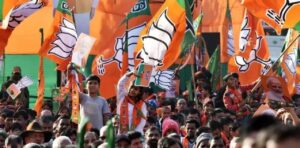
Harjeshwar Singh – Electorally, the BJP has remained a minor player in the state for most of its history, hovering around 6–7 per cent vote share and functioning largely as a junior ally of the Shiromani Akali Dal. Its influence has been geographically narrow—confined mainly to urban centres and border districts adjoining Himachal Pradesh and Jammu & Kashmir—with little penetration in rural Punjab, where agrarian interests dominate political behaviour. Among major Indian states, Punjab has consistently ranked as one of the BJP’s worst performers, second only to Tamil Nadu.
Jaibans Singh –BJP dominated those areas of Punjab where it held electoral responsibility. In real terms it is the most successful political party in Punjab. It has the experience and the knowledge to stabilize its Pan-Punjab presence now that it has decided to do so. The judgements being meted out are premature.
Harjeshwar Singh – In contrast, the Congress has been the dominant political force in Punjab for decades, with deep organisational roots in both urban and rural areas. Historically, large sections of Punjab’s Hindus gravitated towards the Congress, influenced by Arya Samaj traditions, the party’s early urban base, and its role during critical moments such as the Punjabi Suba movement and the militancy years. In cities like Ludhiana, Jalandhar and Amritsar, the Congress came to be seen as a safer, more accommodative political home than the Jan Sangh or BJP. Apart from Congress even Akali Dal has also made inroad into the Hindu vote in Mandi towns of Malwa and AAP by portraying Kejriwal as a “Bania” who understands business.
Jaibans Singh – On the one side the author says that Punjab looks down at the BJP for being a Bania party and on the other he says Kejriwal has Hindu vote for being looked upon as a Bania. The bias in the outlook of the author is very clear.
The whole of Punjab is now seized with the question as to how and why the state has tolerated a party (Congress) that was responsible for the dark days of militancy that led to the death of lakhs of innocents especially the youth and triggered a migration that has now become the bane of Punjab. It is only a small segment of people like the professor who are choosing to turn a blind eye to this reality.
Harjeshwar Singh – This history also undercuts the persistent myth of a consolidated “Hindu vote” in Punjab. Hindu political behaviour in the state has been highly fragmented, shaped by region, caste, occupation and local histories. The preferences of Hindus in the hilly belt differ markedly from those in the Malwa heartland or major cities. Hindu Dalits, dera followers and trading communities have often voted differently, making the idea of a monolithic Hindu bloc analytically misleading. Although the “Modi Phenomenon” has shown signs of leading to “Hindu consolidation” during general elections, pragmatic considerations have swayed most Hindus to other political parties during state elections in Punjab. Result of recent by-elections largely reflect this trend.
Jaibans Singh – This point has been covered above. Consolidation of Hindu vote as an electoral practice by the BJP is a figment of academic imagination. The party is too experienced and mature to base its electoral fortunes on such naïve hypotheses. The BJP objective is to earn the vote of each and every citizen of India. This applies to Punjab too.
Harjeshwar Singh – The BJP’s structural problems in Punjab are therefore deep-rooted. During its long alliance with the Akali Dal, the party was constrained politically and organisationally, unable to expand independently. It has also lacked a charismatic state-level leader, a problem compounded by the marginalisation of Punjab leaders within the national BJP hierarchy. Figures like Navjot Singh Sidhu exited early, while others failed to gain mass traction. New entrants like Captain Amarinder Singh and Sunil Jakhar have struggled to mesh into BJP culture.
Jaibans Singh – It is agreed that earlier the BJP was constrained politically. However, it had a very strong organization to fulfil the responsibility that it held. There is no shortage of charismatic leaders in the BJP in Punjab. In fact, the party boasts of a large number of leaders among Jat Sikhs, SC’s, OBC’s, Hindus, non-Jat Sikhs or any other segment. It also has the adequate number of seniors and intellectuals who can nurture a cradle of junior leadership and are willing to do so. It has the capacity of creating and nurturing good leadership. No other party can boast of such strength and potential. In the area of leadership in Punjab the future clearly belongs to the BJP.
Harjeshwar Singh – The party’s social base in Punjab remains narrow, largely confined to urban traders, sections of the middle class, and a few isolated pockets—particularly in the sub-mountainous belt and areas adjoining Rajasthan. Its organizational presence is weak and shallow, with limited penetration or resonance in rural Punjab. Moreover, the party’s recent attempts to consolidate so-called “non-dominant” castes, drawing from strategies employed in the Hindi heartland, are unlikely to produce comparable outcomes. In Punjab’s pluralistic, Sikh-dominated social order, caste identities are neither as rigid nor as politically mobilisable, reducing the effectiveness of such social engineering.
Jaibans Singh – If BJP has a base among urban traders, middle class, sections close to the mountains and Rajasthan then what else of Punjab remains? The professor has negated his own hypotheses. More importantly, the statements are speculative; they are supporting a mind-set that is not based on any deep or empirical study. The previous articulations by Jaibans Singh clearly offset all points made here. It is with analysis of this nature that phenomenal mistakes are made by many political parties. In this case, the mistakes will be to the advantage of BJP.
Harjeshwar Singh – This weakness has been magnified by a persistent perception of the BJP as anti-Sikh and anti-farmer, especially after the farm laws agitation. The RSS has been effectively portrayed by its opponents as hostile to Sikh institutions, a narrative reinforced by the Centre’s handling of agrarian protests.
Jaibans Singh – The BJP is well aware of the policies and objectives of certain forces that wish to keep the party away from the political mainstream in Punjab. These forces are doing their job and the BJP Sangathan (organisation) is doing its own. Let us not be in a hurry to declare victory of the false and misleading narrative.
The RSS, as a social organization, and SGPC, as a religious organization, function in vastly different domains. The RSS has no conflict with any Sikh institution especially the SGPC. It is the SGPC that engages the RSS negatively due to the pressure of its political masters. The SGPC should be looking at the Christian Church more closely if it actually wishes to do its job properly. People understand this quite well. Punjabis are visibly disenchanted by the current leadership of the SGPC that is functioning as an extension of a political party. Voices are not coming out in the open because of the high esteem in which this organization is held. If it does not self-correct then the disgruntlement will come out in the open.
Harjeshwar Singh – Compounding this is the widespread belief that the BJP has pursued anti-Punjab policies—from its farm laws and centralising tendencies to disputes over institutions such as BBMB and Panjab University, inadequate flood relief, and rhetoric that conflates Sikh assertion with separatism. National narratives centred on Pakistan or communal polarisation have limited appeal in a state with a small Muslim population and a strong egalitarian Sikh ethos that historically muted caste-based polarisation.
Jaibans Singh – The perception of widespread aloofness from BJP is the creation of a well-conceived narrative supported by a professional media strategy whose strength is the social media. This happens against the BJP quite frequently and is negated by the interactive mobilisation of the party workers at the personal level. Punjab too will relate with the truth and very strongly so. Punjab is in the forefront of the Pakistan centric security consciousness that the BJP strongly holds.
Harjeshwar Singh – Organizationally, the BJP has also made tactical missteps. The induction of what critic’s term “political scrap” from rival parties, leaders such as Manpreet Singh Badal, Kewal Singh Dhillon, has damaged its credibility without delivering commensurate electoral dividends. Many Congress and Akali leaders who joined the BJP have reportedly struggled to adjust to its organisational culture and ideological framework, facing hostility from the Sikh peasantry and alienation within local party units. Recent signs of dissent involving figures like Captain Amarinder Singh and Sunil Jakhar underscore these tensions.
Jaibans Singh – Presently, the people of Punjab find all leaders of all political parties wanting in good leadership qualities. It is widely accepted that Punjab is facing a huge leadership crisis not only in the political but also in the social and religious domains. The BJP is sailing in the same boat as the other parties. The acid test will be the presentation of a leadership module which generates confidence within the people. Here BJP has a distinct advantage.
Harjeshwar Singh – Electoral outcomes reflect these limitations. The BJP has suffered reverses in constituencies such as Gidderbaha, Barnala, Tarn Taran and Dera Baba Nanak, as well as in rural local body elections. As a result, pressure is mounting on the party to reconsider an alliance with the Akali Dal, despite the mutual distrust following their 2020 split.
Jaibans Singh – BJP has the resilience of absorbing defeats for a sustained period of time without losing confidence in its core policies and in its cadre. The BJP cadre, in fact, is happiest when it is working in opposition. The party will keep building the momentum till the end state that is required for the good of Punjab is attained and that would be a BJP led government in the centre and in the state.
Harjeshwar Singh – If the BJP chooses to contest the 2027 Assembly elections alone, it risks severe marginalisation, if not near decimation. Punjab’s political terrain remains resistant to the BJP’s dominant national template, and without a credible mass base, organic leadership and cultural alignment, the party’s rise in the state may prove far more limited than its proponents assume.
Conclusion by Jaibans Singh
One would like to believe that the article has been written by Professor Harjeshwar Pal Singh as a friend of the BJP and is an attempt to list out the weakness and fault-lines in the party structure for its betterment and for the overall good of Punjab.
It can also be part of the narrative formation that certain vested interests aligned against the BJP indulge in as a futile attempt to keep the people away from the party. Such insignificant pin-pricks are unlikely to break the confidence of its party cadre and as an extension the people.
Either way, the article by Professor Harjeshwar Pal Singh is simplistic and predictable in content and context. The points articulated can be found in the flawed ministrations of many so-called intellectuals and political pundits. They lack any originality, knowledge of ground reality and contemporary research. It is hoped that the tool kit type of articulation that our so-called intellectuals adopt will find closure after the point wise counter-arguments presented by Jaibans Singh.
The ground reality is that the people of Punjab are looking for a political dispensation that can cut the clutter and concentrate, with absolute honesty and commitment, towards resolving the issues that are throwing this vibrant region into a deep and dark pit. They want development and economic security above all else. Undoubtedly, it is only the BJP that has the financial muscle, the experience, the resolve , the commitment and the organization ability to deliver what the people want. This realization cannot be kept away from the people for too long now.