Iqbal Singh Lalpura
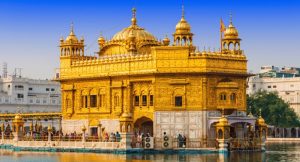
Three verses from Sri Guru Granth Sahib, given below, define the entire Sikh way of life. And lay down a clear framework of disciplined living to include early rising, remembrance of the Divine, honest effort, surrender to the Guru’s will, and above all, the absolute authority of Gurbani. There is no ambiguity here, no scope for interpretation that weakens responsibility.
“Har Satgur ka jo Sikh akhai
Su bhalke uth Har Naam dhiāve.
Udam kare bhalke parbhāti
Isnān kare Amritsar nābhe.”
(Sri Guru Granth Sahib Ji, Ang 305)
“So Sikh sakhā bandhap hai bhāī
Je Gur ke bhāṇe vich āve.
Apne bhāṇe jo chale bhāī
Vishad chhūṭan khāve.”
(Ang 601)
“Satgur kī bāṇī sat saroop hai,
Gurbāṇī bāṇīae.”
(Ang 304)
Yet a deeply disturbing question confronts Sikh society today: if Sri Guru Granth Sahib Ji is the living, complete, and eternal Guru, why has Sikh life increasingly become dependent on living preachers, deras, babas, and parallel centres of authority? Why do Sikhs bow before Sri Guru Granth Sahib Ji in form, yet seek guidance, blessings, reassurance, and solutions elsewhere?
This contradiction lies at the heart of the moral crisis in contemporary Sikh life. It is not a crisis of belief, nor a failure of Sikh philosophy. Sikh thought remains among the most ethical, and universally spiritual systems known to humanity. The crisis is one of practice, confidence, and a gradual drift from the Guru-centred life envisioned by Guru Nanak Dev Ji and conclusively sealed by Guru Gobind Singh Ji.
Guru Gobind Singh Ji ended personal guruship forever. By declaring Sri Guru Granth Sahib Ji as the eternal Guru, he closed the door on intermediaries, inherited spiritual authority, and human claimants to divine status. Sikhism was designed as a direct relationship between the Guru and the Sikh, mediated only through the Shabad. No living person was meant to stand between the seeker and the Guru. This decision was revolutionary and without parallel. It ensured that Sikhism would never degenerate into personality cults or priestly domination.
Yet, over time, the Guru has been reduced in practice to ritual reverence, while authority has quietly shifted to human figures. The growing influence of jathedars, granthis, babas, and charismatic preachers is not evidence of spiritual vitality; it is a symptom of distance from Gurbani-based living. When the Guru is confined to ceremony and not allowed to govern daily conduct, others inevitably rush in to fill the vacuum. This weakens Sikh autonomy and fractures the collective conscience.
Equally troubling is the transformation of many Gurdwaras from Dharamsals into arenas of factional politics and power struggle. Guru Nanak Dev Ji described the place of worship as a Dharamsal—a space for practising dharam, sitting together as equals, serving humanity, and shaping moral character. The very word “Gurdwara” means the doorway to the Guru. It was never meant to become a platform for political ambition, personal rivalry, or electoral mobilisation.
While Sikh history bears testimony to political resistance when justice demanded it, the routine intrusion of partisan politics into Gurdwaras corrodes spiritual authority. Political speeches after Ardas in the presence of Sri Guru Granth Sahib Ji, personal attacks, and factional mobilisation weaken the sanctity of the space. A community that politicises its sacred institutions gradually loses moral clarity. Power replaces principle, and numerical strength replaces ethical conduct.
Gurbani allows no scope for selective obedience. “Satgur kī bāṇī sat saroop hai.” The Guru’s Word is truth itself. Sri Guru Granth Sahib Ji is not limited to personal devotion; it provides guidance for religious conduct, social harmony, economic justice, ethical governance, and spiritual liberation. It rejects inequality, exploitation, tyranny, hypocrisy, and moral cowardice. It teaches honest earning, sharing with dignity, fearlessness before power, and surrender to Hukam. Above all, it guides the seeker towards oneness with the Divine.

Yet contemporary Sikh life too often reflects ritual without discipline, identity without ethics, and assertion without humility. Gurbani speaks of early rising, Naam Simran, honest labour, and sharing with others. Modern practice frequently seeks comfort without responsibility, shortcuts without effort, and validation without inner transformation. The Guru has not changed. The message remains complete and sufficient. It is we who have drifted.
This reality becomes particularly stark during the commemoration of the martyrdom of the Sahibzade from 21 to 26 December. These days represent one of the most testing periods in Sikh history—perhaps the darkest week, not merely because of the brutality inflicted, but because of the moral courage demanded of the community. The sacrifice of the four Sahibzade was not an emotional episode meant only for mourning. It was a civilisational challenge thrown at the conscience of the Khalsa for all times.
Guru Gobind Singh Ji’s words echo across centuries:
“Char muē to kiā huā, jīvat kai hazār.”
What if four have fallen? Thousands live on.
This was not a statement of numerical pride. It was a test of continuity and character. The Guru was not counting bodies; he was measuring whether the Khalsa would live by the values for which the Sahibzade were martyred. Today, Sikhs number in crores across the world, yet as a collective moral force, the community often appears fragmented, hesitant, and uncertain. Numbers have increased; clarity has weakened.
The commemoration of the Sahibzade must therefore not become ritualistic remembrance. Candles, speeches, and emotional narratives have meaning only if they lead to introspection and reform. The Sahibzade did not die to be remembered; they died to ensure that fearlessness, righteousness, and moral sovereignty remained alive. Their martyrdom confronts every Sikh with a direct question: where do you stand today when truth is inconvenient, when justice is costly, and when silence feels safer than conscience?
The tragedy is that many religious preachers who read Sri Guru Granth Sahib Ji to guide the community do not practise it themselves. Gurbani warns clearly:
“Avr updesai āp na karai ॥ āvat javat janmai marai ॥
Jis ke antar basse nirankar ॥
Tis kī seekh tarre sansār ॥”
Those who preach but do not practise ruin their own lives and the future of those who follow them. Equally alarming is that many who claim to be leaders of the Panth have never read Sri Guru Granth Sahib Ji in its entirety. A majority have not taken Pahul or committed themselves to the Khalsa Rehat Maryada. Some of them do not feel ashamed, even after having been exposed with criminals facing charges of sacrilege of Sri Guru Granth Sahib Ji. One can imagine the fate of a community led by such contradictions.
The words of Guru Gobind Singh Ji must therefore be read with complete honesty:
“Jab lag Khalsa raheo niāra,
Tab lag tej deo main sārā.”
This is not a curse; it is a conditional promise. Strength, dignity, and divine support are assured only so long as the Khalsa remains distinct in conduct, values, and discipline. The moment Gurmat principles are diluted by ritualism, dependency, or borrowed traditions, the Guru withdraws confidence—not in anger, but as moral correction. The present weakness of Sikh institutions and leadership must be understood through this lens.
It would be simplistic to label Sikhs as “losers.” Sikh contributions to India and humanity are immense and undeniable. But it would be equally dishonest to deny that moral authority has declined. Fragmentation, erosion of trust, and confusion point to one central cause: distance from Sikh philosophy as lived reality.
This moment demands introspection, not accusation. Sikh history must be studied not for nostalgia, but for guidance. Sri Guru Granth Sahib Ji already offers solutions to religious, social, economic, and political challenges. What is required is the courage to live by it. Gurdwaras must return to being Dharamsals of learning and service. Preachers must act as teachers, not intermediaries. Sikhism must once again be presented as a universal moral path for humanity, not a closed identity consumed by its own anxieties.
The Guru has not abandoned the Khalsa. The promise still stands. The question is whether the Khalsa is ready to remain niāra again—distinct not in slogans, but in conscience; not in politics, but in conduct; not in ritual, but in lived truth. Only then will the martyrdom of the Sahibzade truly guide the present and shape the future, and only then will Sikhism reclaim its rightful place as a moral lighthouse for humanity.