Jaibans Singh
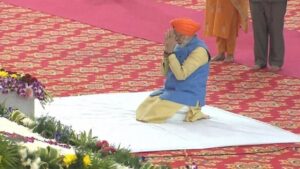
The recent BJP rally in Moga, addressed by Union Home Minister Amit Shah, has generated considerable political discussion across Punjab. The rally was projected as the bugle call of the Bharatiya Janata Party (BJP) for the forthcoming Punjab Vidhan Sabha elections. The state unit of the party mobilised its entire organisational strength to ensure that the event was a success. Judged by the turnout, it largely succeeded in demonstrating that the BJP is eager to expand its political footprint in the state.
Shah’s address, as is typical of him, was marked by clarity and precision. He made it unambiguously clear that the BJP intends to contest the next Punjab Assembly elections independently and with the objective of forming the government. He highlighted two major issues that the party intends to foreground in its campaign — the menace of drugs and the growing concerns over illegal religious conversions. He also reminded the people of the governance deficits that Punjab has suffered under successive administrations of the Indian National Congress and the current Aam Aadmi Party government.
The underlying message was straightforward: if the BJP is given an opportunity to govern Punjab, it promises to change the trajectory of the state.
The rally certainly succeeded in drawing attention towards the BJP’s ambitions in Punjab. However, a post-event assessment suggests that the people of the state are looking at the BJP with cautious interest rather than unconditional enthusiasm.
What many Punjabis appear to expect is not merely a routine political campaign but something far more significant, particularly from Prime Minister Narendra Modi himself.
Across Punjab, and especially among Sikhs, there is a widely held perception that Modi holds a special place in his heart for the community and for the state. During his more than a decade in office, he has taken several initiatives to honour the Sikh Gurus and to recognise the immense contribution of Sikh history and philosophy to the Indian civilisational ethos. Commemorations related to Guru Nanak, Guru Gobind Singh, and other Sikh luminaries have witnessed national prominence under his leadership.
Equally significant have been the efforts made by the Modi government to address the long-standing pain associated with the 1984 Sikh Genocide. Several steps were taken to reopen stalled investigations by constituting special investigative mechanisms directed at providing justice to victims of the genocide.
These initiatives have been acknowledged and appreciated by many in Punjab. Yet, while such gestures are meaningful and deeply valued, people increasingly feel that they are not enough to address the immediate challenges confronting the state.
Honouring the Gurus uplifts collective pride and strengthens civilisational memory, but it does not generate the jobs that Punjab’s youth desperately need. Efforts to deliver justice to the victims of 1984 are morally essential, but they do not halt the tragic deaths that continue to occur due to drug abuse, organised crime, and gangster violence.
The problems facing Punjab today are existential in nature. They threaten not only economic stability but also the social and cultural fabric of the state.
Drug addiction continues to devastate families across districts. Youth unemployment remains alarmingly high. Agricultural distress persists despite decades of policy interventions. Large numbers of young Punjabis see migration abroad as their only viable path to a secure future.
These trends collectively reflect a deeper crisis of governance and leadership. At the heart of Punjab’s predicament lies a prolonged leadership deficit.
None of the political parties, be it the ruling Aam Aadmi Party, the Indian National Congress, the Shiromani Akali Dal, or even the BJP, currently possesses a leadership that has the requisite stature and authority required to pull Punjab out of its socio-economic morass. The political discourse remains fragmented, and governance continues to drift without a unifying vision.
There is also a growing perception among sections of the public that Punjab has not received the strategic political attention from the central leadership that its situation demands.
While the national leadership of the BJP commands immense authority and visibility, the state unit in Punjab appears to lack a clear-cut leadership structure or a compelling direction. The absence of a strong local leadership capable of inspiring confidence has contributed to the impression that the party’s ambitions in Punjab remain organisational rather than transformational.
Against this backdrop, the figure of Prime Minister Narendra Modi looms large in the public imagination.
To many Punjabis, Modi is not merely the Prime Minister of India but a leader of rare global stature. Over the past decade he has emerged as one of the most influential political figures in the world, recognised for his ability to combine vision with decisive governance. His leadership style has often been characterised by bold initiatives, large-scale administrative reforms, and an ability to overturn entrenched systems of inefficiency.
Punjabis, historically known for their martial ethos, tend to admire strength, clarity, and decisive leadership. Their cultural memory is shaped by figures such as Guru Gobind Singh, the warrior-saint who founded the Khalsa, by Banda Singh Bahadur, who challenged imperial power, and by the legendary Maharaja Ranjit Singh, who unified Punjab and transformed its socio-political landscape within a remarkably short period. Punjabis respond to leadership that demonstrates courage, authority, and the capacity to bring about real change.
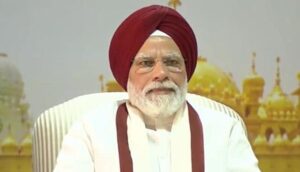
Many people in the state view PM Modi through a similar lens. They see him as a leader with the stature and strategic vision comparable to those who once reshaped the destiny of Punjab.
They, therefore, feel that Modi can and should do much more for Punjab. The feel that his initiatives should match his stature, his vision and his personality. If he were to take a direct interest in Punjab’s revival, the state could witness a transformation similar to what has occurred in other parts of the country.
This perception leads to an interesting paradox in Punjab’s current political discourse. The official political narrative of the BJP is straightforward: Punjab has experimented with all major political parties over the decades, and it should now give the BJP an opportunity to govern and demonstrate the difference. However, a section of the public holds a simple argument: why should PM Modi limit himself to conventional political calculations when the crisis in Punjab demands his extraordinary leadership?
The people of Punjab are observing the political environment carefully as the Punjab Legislative Assembly elections 2027 approach. Their decision will ultimately depend on which political formation appears capable of delivering stable and credible governance. At the constituency level, voters are likely to favour candidates who possess clean reputations and a record of dedicated public service. Leaders who have previously held office but failed to deliver tangible results may find it difficult to regain public trust.
Punjab’s political culture has always revolved more around personalities than parties. Voters tend to rally behind leaders who inspire confidence rather than merely endorsing party labels.
In this context, the message emerging from many public discussions is striking: Punjab wants Modi’s direct leadership without ambiguity or hesitation.
If such a dynamic were to emerge, even the choice of local candidates or the eventual chief ministerial face of the BJP might become secondary. What would matter most is the credibility of the larger leadership framework guiding the transformation.
For the BJP, therefore, this moment represents a significant opportunity. A carefully designed information and outreach campaign built around the Modi vision can build trust with Punjabis. The party should position itself as the vehicle for a broader revival of the state under the direct leadership of Prime Minister Narendra Modi.
If this moment is missed, it may take years before such favourable political conditions reappear.
A natural question arises here: why should the Prime Minister of a vast nation personally involve himself so deeply in the affairs of one state?
The answer lies in the strategic importance of Punjab. Punjab is a sensitive border region whose stability directly affects national security. If socio-economic decline continues unchecked and governance failures deepen, the resulting instability could weaken the security fabric of the entire country.
Ensuring that Punjab remains prosperous, stable, and confident is therefore an essential component of India’s national vision.
For Prime Minister Modi, whose political philosophy consistently emphasises national unity and development, the revival of Punjab would naturally form part of that larger mission.
When this strategic imperative is combined with his widely perceived respect and affection for the land of the Gurus, the case for a more direct and decisive engagement with Punjab becomes compelling.
In many ways, the aforementioned expectation reflects the final hope of a people searching for leadership. For many Punjabis, the belief persists that such leadership exists and that it resides in the person of Narendra Modi. If that belief translates into action, Punjab may yet find its way out of the depths of despair.