Iqbal Singh Lalpura
Modern society sometimes treats seventy as the age when a person should slow down, step aside, and quietly watch life from the sidelines. But anyone who has studied history or simply observed life carefully, knows that this assumption is not only wrong but also unfair. In truth, the years after seventy can become the most meaningful period of life, a time when wisdom, humour, and experience combine to create powerful contributions to society.
Every human being carries two simple desires in the heart: to live with love and dignity, and to be remembered after death. No one wishes to vanish from the memory of the world as if his life had no meaning. Whether a person is a farmer, a teacher, a soldier, or a scholar, everyone hopes that when people speak about them after they are gone, they will say: “He lived well and served others.”
But history teaches us that only a few people are remembered for generations. The rest are gradually forgotten as time moves forward. Why does this happen? The answer is simple. Those who live only for themselves disappear from memory, but those who live for society leave a legacy.
This truth is beautifully expressed in the teachings of Guru Nanak Dev Ji. Gurbani reminds us again and again that life is temporary, but truthful living and service to humanity make a person immortal in the hearts of people. Saints, protectors of society, and those who stand for righteousness are remembered long after their physical life ends.
For those who have crossed seventy years of age, this message carries a special meaning. By this time, a person has lived through several decades of social and political changes, family responsibilities, successes, and failures. In other words, they have collected the most powerful resource known to mankind ie experience.
Experience is something that cannot be purchased, borrowed, or quickly learned. It is earned slowly through life itself. That is why elders are sometimes compared to walking libraries of wisdom.
The Sikh tradition offers many inspiring examples that also bring a smile to the face. One such example is the life of Guru Amar Das, the third Sikh Guru. Before becoming Guru, he spent many years serving with humility. According to Sikh history, even in advanced age he would wake up before dawn and walk miles to fetch water for the bath of Guru Angad Dev. Imagine a man past sixty cheerfully walking long distances every morning carrying heavy water pitchers.
If such a person were living today, someone might advise him, “Baba Ji, please take rest. You are already retired!” But Guru Amar Das proved that dedication and service have no retirement age. In fact, he became Guru at the age of seventy-three and led the Sikh community with extraordinary wisdom and organizational ability.
One might jokingly say that Guru Amar Das started his most important job after most people today apply for a pension.
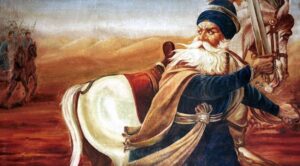
Another powerful example is Baba Deep Singh, the great Sikh warrior and saint. Baba Deep Singh was around seventy-five years old when he took up arms to defend the sanctity of Sri Harmandir Sahib from invading forces. When he marched toward Amritsar with his companions, someone might have asked him with concern, “Baba Ji, is this not the age for resting at home?”
History records his immortal reply: that life must be lived in service of truth and righteousness. His courage at that age became legendary. Today, centuries later, his name still inspires millions.
The lesson is clear: seventy is not the end of usefulness; it can be the beginning of greatness.
Of course, this does not mean that everyone after seventy should pick up a sword like Baba Deep Singh. In modern times, the most powerful weapon available to elders is not steel but knowledge.
Knowledge and experience together form a powerful force. A single thoughtful article written by someone who has observed life for decades can influence more minds than a hundred speeches. When elders write, speak, and guide younger generations, they pass on a treasure that cannot be found in textbooks.
Punjab, in particular, needs such wisdom today. The state has produced great saints, warriors, scholars, and reformers. Yet modern challenges—economic difficulties, social divisions, and changing values—require thoughtful guidance.
Elders possess the long view of history. They remember events, policies, and movements that younger generations know only from books. They understand the consequences of decisions and the patterns that repeat themselves in society. This perspective is invaluable.
Instead of withdrawing from public life, elders can become mentors, writers, and thoughtful commentators. They can share insights through newspapers, books, community meetings, and conversations with young people. Sometimes even a simple story told to grandchildren carries more wisdom than a long lecture.

There is also another benefit of reaching seventy, one develops a healthy sense of humour about life.
At this stage, a person has seen enough ups and downs to know that many things we once considered extremely important were actually temporary. Promotions, political debates, and social rivalries often appear less serious when viewed through the lens of decades.
One elderly gentleman once joked, “When I was young, I wanted to change the world. At fifty, I wanted to change my city. At seventy, I am trying to change the television channel before I fall asleep.”
Humour like this is not a sign of weakness; it is a sign of wisdom. It shows that the person has learned to look at life with balance.
The later years can also be among the happiest if lived wisely. Responsibilities become lighter, children become independent. There is more time for reading, reflection, writing, travel, and spiritual growth.
Many great thinkers produced remarkable work in their later years. Experience gives depth to ideas. Thoughts become clearer because they are not driven by ambition but by understanding.
Gurbani also reminds us that life should ultimately move toward spiritual awareness. The teachings of Guru Nanak Dev Ji encourage humility, service, and remembrance of the Divine. When these principles guide life, old age becomes a period of peace rather than anxiety.
Every person must eventually leave this world. This is the universal law of nature. But the real question is what remains after we are gone.
Some leave behind wealth that disappears within a few years. Others leave behind ideas, values, and inspiration that last for centuries.
Saints and those who serve and protect society remain alive in the collective memory of humanity. Their stories are told to future generations because their lives carried meaning beyond personal comfort.
For people who have crossed seventy, the opportunity is therefore immense. Instead of thinking that life’s work is finished, they can realize that their most valuable contribution may still lie ahead.
The power of knowledge, experience, and moral courage is far greater than physical strength. These qualities can guide society, inspire youth, and help communities move toward wisdom and harmony.
Punjab needs that guidance. Younger generations need examples of thoughtful leadership grounded in history, ethics, and service.
Why not use the powerful weapon of knowledge that a lifetime has provided?
Life after seventy can thus become not a period of decline, but a stage of influence, laughter, wisdom, and service—a time when a person not only enjoys life but also ensures that when they depart from this world, they are remembered with respect and gratitude.
(The author is former Chairman, National Commission for Minorities, Government of India)