Dr. Iqbal Singh Lalpura
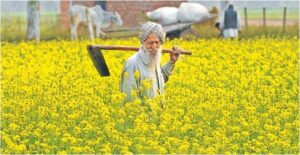
The Bani of the Guru Sahibans recorded in Sri Guru Granth Sahib Ji shows human beings the path of living life in the right manner rather than running away from life. The Guru Sahibans have shown human beings the path of working hard, remembering the Almighty, enjoying happiness, serving others and attaining liberation while living in the world.
Mahala 5 ॥
Nanak satgur bheti-ai poori hovai jugat ॥
Hasandia khelendia painandia khaavandia viche hovai mukat ॥2॥
Gurbani makes this way of living life even clearer:
Salok Mahala 5 ॥
Udam karedia jeeo tu kamaavdia sukh bhunch ॥
Dhiaaindaa tu Prabh mil Nanak utri chint ॥1॥
Meaning, a human being should make effort, earn through hard work, enjoy the comforts of life and continue remembering Waheguru. In this way, his anxiety is removed.
This is the essence of the Sikh philosophy of life: not escape from the world, but to live in the world and make life meaningful through truth, hard work, service and remembrance of the Lord.
But Guru Nanak Dev Ji also highlighted another important aspect of human life. That was liberation from the mentality of fear, slavery and humiliation.
Mahala 1 ॥ Salok ॥
So jeevia jis man vasia soi ॥
Nanak avar na jeevai koi ॥
Je jeevai patthi lathi jaai ॥
Sabh haram jeta kichh khaai ॥
Guru Sahib made it clear that a life in which there is no dignity and self-respect is not truly a life worth living. Therefore, living in fear and apprehension can never be an ideal for a Sikh. The courage to stand for truth and righteousness is an inseparable part of Sikh life.
The ideal for a Sikh is:
Bhai kaahoo kau det nahi, nahi bhai manat aan.
Neither to frighten anyone nor to be afraid of anyone.
This itself is the identity of the character of a Sikh.
Guru Gobind Singh Ji made this path even clearer. The Sikh’s prayer is: Waheguru, give me the strength that I may never turn away from the path of good deeds. Turning away from noble deeds is not an option for a Sikh. The Guru gave the Sikh the ideal of dedicating his life to righteous deeds and, when necessary, embracing even death for the protection of righteousness:
Deh Siva bar mohe ihai, subh karman te kabhoon na taron ॥
Na daron ar so jab jaai laron, nischai kar apni jeet karon ॥
Ar sikhon apne hi man ko, ih laalach hau gun tau uchron ॥
Jab aav ki audh nidaan banai, at hi ran mein tab joojh maron ॥231॥
These are not merely words or teachings. Sri Guru Arjan Dev Ji and Sri Guru Tegh Bahadur Ji, through their martyrdoms, made these principles real in life and created history. The younger Sahibzadas, Baba Zorawar Singh Ji and Baba Fateh Singh Ji, also sacrificed their lives with extraordinary steadfastness for the protection of righteousness and laid the foundation of the edifice of the community.
“Raj Karega Khalsa” is also not merely a slogan; it is the conception of such a system in which political power is integrated with the principles of religion, justice and welfare of the people. Regarding governance expressed by Sri Guru Gobind Singh Ji through Bhai Nand Lal Ji, the writings of Bhai Sahib contain instructions and teachings concerning religious, personal character, political and social order.
Among those who gave practical form to these ideals, the name of Baba Banda Singh Bahadur Ji comes first. After the victory of Sirhind, making Lohgarh the centre, he tried to put into practice the concept of Halemi Raj.
For this objective, in the eighteenth century the Khalsa endured oppression beyond imagination. Sikhs were cut limb by limb, placed on breaking wheels, cut with saws, and rewards were placed on their heads. But the Sikh community did not bow; rather, it dedicated its lives to achieving the ideal. Under the leadership of leaders such as Sardar Kapur Singh, Baba Jassa Singh Ahluwalia, Sardar Jassa Singh Ramgarhia, Sardar Charat Singh and Baba Baghel Singh, the Khalsa became increasingly powerful. By the end of the eighteenth century, the influence of the Khalsa had been established in Delhi and several areas of northern India. At the end of the century, Maharaja Ranjit Singh Ji, with Lahore as the centre, established a strong Khalsa Raj. From the Khyber Pass to Ladakh and from Kashmir to Multan, the flags of the Khalsa were flying.
Sikh history is also witness to the fact that communities have suffered greater damage from internal weaknesses than from external enemies. Some individuals, wearing Sikh appearance, show sympathy towards their own people and move along with them for some time, but when the real challenge arises—the choice between personal benefit and the complete interest of the community—they compromise the interests of the community for personal gain, position or political power. Many times, up to the middle of the nineteenth and twentieth centuries, such people have become historical figures who stood with the enemies of the community.
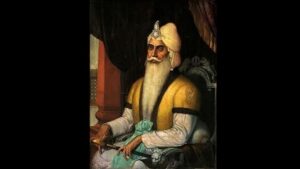
After the death of Maharaja Ranjit Singh Ji, as a result of these internal betrayals and the intervention of the British Company, the Lahore Darbar became weak. In 1846, the influence of the British East India Company increased, and in 1849 the Khalsa Raj came to an end. Maharaja Duleep Singh Ji was converted to Christianity and sent to England, while Maharani Jind Kaur Ji faced imprisonment and supervision away from the country in Nepal.
After the end of political power, Sikh religious and social institutions were also affected. The management of historical Gurdwaras came into the hands of Mahants. At many places, allegations of corruption and religious mismanagement came to the fore. Efforts for religious conversion by Christian missionaries also began.
In opposition to this, the Singh Sabha Movement of 1873 began work to strengthen Sikh religious identity, education and religious propagation. Later, institutions such as the Chief Khalsa Diwan also came into existence. These institutions also did important work in the fields of Sikh religion and education, so that the resentment of the Sikh Panth towards the British would decrease. Mobilisation for state power was not its objective.
The Gurdwara Reform Movement, which continued from 1920 to 1925, created a major religious and political awakening among the Sikh community. Thousands of Sikhs made sacrifices and ultimately the management of Gurdwaras came into Sikh hands. This was an important turning point in Sikh history and politics.
But because of the Shiromani Akali Dal joining with the Congress during the freedom struggle, the propagation and promotion of the Sikh religion remained away from the agenda, and because of the intermixing of religious institutions with Sikh politics, the role of political leaders in religious institutions became complicated. Where religious propagation, research, education and preparation of the youth should have been the first priority, politics became dominant.
The Partition of 1947 was another great tragedy for the Sikh community. Lahore, which had remained the capital of the Khalsa Raj, became part of Pakistan. With the partition of Punjab, millions of people were uprooted. Sikhs living in West Punjab faced religious, social and economic pressures, and a large number of people came to India. Some were also forcibly converted.
After independence, Congress had influence for a long time in Punjab and at the Centre. During this period, Akali leaders sometimes cooperated with Congress and sometimes opposed it, but a long-term national policy could not be formulated for the future. No long-term political agreement for coming to India had been written with Congress. Due to this, after independence, agitations also began to be launched regarding the adoption of the Constitution and the teaching of the Punjabi language.
In 1948 and 1956, the Akali Dal was merged into the Congress Party and the existence of a Sikh political party was ended. After some time, the Akali Dal was revived. What kind of politics was this? History will certainly demand an answer.
Then, after another partition of Punjab, from 1967 till now, a Sikh political party’s government has been formed in Punjab several times. After getting thousands of people killed and causing loss of life and property, what was gained? It is a matter for consideration how much priority was given, after obtaining political power, to the creation of Sikh educational and economic institutions.
The Sikh religious institutions elected by the Sikhs—the Shiromani Gurdwara Parbandhak Committee, Delhi Gurdwara Management Committee and Haryana Gurdwara Management Committee—whether the offerings of the Gurdwaras are being spent on research and propagation of Sikhism, or whether political people decide and benefit from them?
Sikh politics should receive direction from Gurbani, the Guru’s Maryada, Seva and the principles of humility.
The Gurbani command is:
Salok Mahala 3 ॥
Hasti sir jiun ankas hai, aaharan jiun sir dei ॥
Man tan aagai rakh kai, oobhi sev karei ॥
Eiun Gurmukh aap nivaariai, sabh raaj srist ka lei ॥
Nanak Gurmukh bujhi-ai, ja aape nadar karei ॥1॥
It is clear that politics should remain disciplined under religion, rather than religion and the institutions of the Guru being under political power. In the Sikh history of the eighteenth century, the Sangats and leaders would assamble in Gurdwaras, make Gurmatas and implement them without caring for their own lives. Today, political leaders should ask themselves whether they are carrying this tradition forward?
The Golak of Gurdwaras is a symbol of the faith of the Sangat. It should be used for religious propagation, education, service, research, assistance to the poor and the future of the youth. When questions arise regarding the political use of religious resources, the trust of the Sikh community is broken. Therefore, transparency, accountability and responsibility towards the Sangat are very important in management; timely elections and transparency are even more important for this.
The Dharam Yudh Morcha of 1982 and Operation Blue Star of 1984 are very painful chapters of Sikh and Indian history. These events took countless lives and left deep wounds. In 1985, the Rajiv–Longowal Accord was signed , but it has not been fully implemented till today? Continuous struggles, internal divisions and the politics of power have affected the collective strength of the community.
In the history of independent India, at different times, different leaders led the Sikh community. Master Tara Singh, Sant Fateh Singh, Parkash Singh Badal, Sant Jarnail Singh Bhindranwale, Surjit Singh Barnala, Simranjit Singh Mann, etc. are prominent. Every leader had his own time, his own circumstances and his own political thinking. By putting the community into the furnace, what was gained except the chair for oneself? Are Sikhs terrorists? Killing innocent people and spreading terror, in which Sikh philosophy is this written ?
Even today, such people are active in Punjab.
But the biggest question for the community is, when will we rise above personality-centred politics and formulate a long-term institutional strategy?
No leader should be considered Panthic merely because he calls himself Panthic. His thinking, policy, actions, results and long-term commitment towards the community must also be seen.
The Congress Party betrayed the Sikh community after independence, but those hungry for the chair had become committed Congressmen after 1957 itself. Master Tara Singh was left with ,only Sardar Umrao Singh, Ravel Singh and Atma Singh .later Master Tara Singh was also defamed among the Sikh community through Hukam Singh, who had not signed the draft of the Constitution and became a tool of congress against him .
If Congress betrayed, then is every Indian political leader an enemy of the Sikhs? Blind hatred or blind support for any party or government cannot be the Sikh way of thinking. Because dialogue is a fundamental principle of Sikhism, policies should be evaluated on the basis of facts and, where there is agreement, there should be cooperation, where there is disagreement, one’s position should be presented through constitutional and democratic means.
The Constitution of India contains special provisions relating to Sikh religious identity and Sikh religious traditions. The provisions related to Article 25 of the Constitution need to be understood not as a means of creating fear or as a political issue, but in the context of constitutional language and law. The constitutional provision relating to the Sikh right to wear the Kirpan is one part and example of this.
After independence, Sikh leaders, representing different political parties, have continued to serve in the Constituent Assembly, Lok Sabha, Rajya Sabha, state governments and other important institutions. Then why has this issue has not been settled in more than 75 years? Then it appears that the fault lies in the intentions of these leaders.
In 1997, the Shiromani Akali Dal won 75 seats in the Punjab Legislative Assembly and obtained a complete majority. In 1998, the Akali Dal and its allies won all 13 Lok Sabha seats of Punjab. This was an important moment in Sikh political history. But the question is: how much of such political power was used for resolving Sikh issues, higher education for children, employment in Punjab and creating world-class institutions?
Why are Sikh children leaving Punjab in large numbers and going abroad? How many industries, businesses and professional institutions have been created in Punjab to provide employment for them? How many institutions have prepared Sikh youth to advance in the central civil services, judiciary, education, defence, science and other fields?
These questions are not for any one party or individual, but should be our collective self-introspection.
Similarly, the Shiromani Gurdwara Parbandhak Committee, Chief Khalsa Diwan and other Sikh institutions should also evaluate their work. Along with religious propagation, modern education, research, technology, employment and preparation of the youth must also be considered part of religious service.
The Rashtriya Swayamsevak Sangh, which is considered an opponent, was established in 1925 by Dr. K. B. Hedgewar. Has anyone ever clarified the situation through dialogue regarding it? Its supporters consider it a major social and cultural organisation, while it also has critics. For the Sikh community, in this matter too, it is necessary to study facts, history and actual activities rather than fear or rumours.
Has even one Sikh ever been converted by this organisation? Or are those who had left Sikhism are being connected again with Sikhism? What institution has the Sikh community created equivalent to this which can unite the scattered community in India? Is there any basis for this fear, or is it merely suspicion?
The Shiromani Akali Dal has formed political alliances with the Bharatiya Jana Sangh and later with the Bharatiya Janata Party several times after 1967. If political alliances can be formed with these parties, then the leaders should also understand the misunderstandings, doubts and disagreements between the two on the basis of facts, place the truth before the Panth, and take the next political decision with independent thinking. Has this happened?
The BJP governments led by Shri Atal Bihari Vajpayee and Shri Narendra Modi have given priority to several Sikh issues and works related to Sikh heritage. These works should be evaluated impartially. Where the government has done good work, it should be appreciated. Where there have been shortcomings, one’s views should be expressed democratically.
The basic principle of Sikhism is neither to fear anyone nor to frighten anyone. Therefore, creating fear or emotional provocation among the Sikh community regarding any political or social organisation cannot be in the long-term interest of the community. But thought is also necessary.
After Maharaja Duleep Singh was converted, missionaries have remained active in Punjab till today. On the other hand, in Pakistan, Sikhs are being forced to become Muslims. What is the policy to stop this?
Today, foreign forces and different extremist ideologies are attempting to take advantage of religious and social divisions. It is our collective responsibility to protect Sikh youth from drugs, violence, weapons and being misled. The Sikh community worldwide should remain alert to any tendency that weakens the Panth’s mission of love, peace, Seva and Sarbat da Bhala.
Then this question should be considered? whom should the Sikh community fear? The answer has to be found in the Bani and history of the Guru Sahibans. A Sikh should not fear truth, but should stay away from falsehood. One should not hate anyone, rather, oppose injustice. This is the Sikh philosophy.
Today there is a need for scholars, political, social and religious leaders of the Sikh community to sit together, conduct self-examination and formulate a long-term policy. We take pride in the great pages of our history, but are we also learning lessons from that history?
The Sikh community will have to strengthen institutions instead of following individuals. Instead of taking decisions on the basis of emotions, we will have to think on the basis of facts. We will have to adopt the path of self-confidence instead of fear, dialogue instead of hatred and constructive struggle instead of confrontation.
We must also understand that political power in itself is not the final destination. The purpose of political power should be the education, security, economic progress, religious freedom, social justice and human welfare of the community. Without a long-term strategy, no community can sustain its strength.
We will have to protect our religion, strengthen research and propagation of Gurbani, present Sikh history before the world on the basis of facts, provide education and employment opportunities to the youth, and formulate such a strategy for political power through which the community does not suffer further harm.
This task is certainly difficult, but it is not impossible.
Therefore, let us rise above fear, hatred and unnecessary confrontation, and choose the path of democracy for political power.
For this, there is a need for such an organisation which, on the pattern of the International Singh Sabha, connects Sikhs across the world, promotes research and education along with religious propagation, supports the youth, and puts into practice a policy of presenting Sikh history and Gurbani before the world at the global level.
(Dr. Iqbal Singh Lalpura is former Chairman, National Commission for Minorities, Government of India)