Dr. Iqbal Singh Lalpura
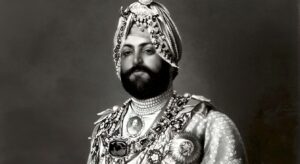
On 10 March 1887, Maharaja Duleep Singh wrote one of the most remarkable political letters in the history of colonial India. Addressed to the Czar of Russia, the exiled son of Maharaja Ranjit Singh sought international support for the liberation of India from British rule. The letter, intercepted by British intelligence, was far more than a diplomatic appeal. It was a reflection of the political realities of India, the condition of Punjab, and the state of Sikh society after the fall of the Lahore Empire.
Maharaja Duleep Singh was the first Indian ruler to internationalize the cause of India’s freedom struggle. Decades before Subhas Chandra Bose sought foreign assistance for India’s liberation during the Second World War.
Nearly fifty years before Bose raised the issue globally, the exiled Sikh Maharaja had appealed to a foreign power to help free India from colonial domination. This aspect of Indian history has never received the scholarly attention it deserves.
Historians have often portrayed Maharaja Duleep Singh merely as a tragic prince who was dethroned, converted, exiled, and separated from his homeland. Yet this letter reveals a different personality: a politically aware ruler who still carried within him the dream of restoring dignity to India and honour to Punjab.
In his communication, Maharaja Duleep Singh reportedly declared that he represented “25 crore people of India.” This statement itself is historically significant. At a time when India stood divided into castes, princely states, and regional loyalties, an exiled Sikh ruler still imagined India as one political civilization deserving freedom from foreign domination.
The demographic and military realities of that period reveal an even deeper truth. Around 1887, India’s population was approximately 25 crore, while the total number of British rulers in India, including administrators, officers, and military personnel, was barely one lakh. The British Indian Army consisted of nearly two lakh troops, divided between Europeans and Indians.
Among these soldiers, approximately 45,000 were Sikhs.
This figure is extraordinary when compared to the Sikh population of Punjab, which was around 80 lakh at that time. It demonstrates the immense military contribution of the Sikhs to the British Indian Army after the annexation of Punjab in 1849.
The same Khalsa nation that had fought historic battles against the British at Mudki, Ferozeshah, Chillianwala, and Gujarat had, within a few decades, become one of the strongest military pillars of the British Empire in India.
The British clearly understood the martial spirit and discipline of the Sikhs after facing the Khalsa Army during the Anglo-Sikh wars. After annexing Punjab, they adopted a calculated policy of recruitment, rewards, land grants, and recognition to transform former enemies into defenders of the Empire.
The Tragedy Lay Elsewhere.
When Maharaja Duleep Singh attempted to reorganize resistance against British rule, he found himself almost alone. Historical references indicate that among prominent Sikhs, he could confidently name only one committed supporter — Thakur Singh Sandhawalia.
This fact exposes the painful political fragmentation that had overtaken Sikh society after the collapse of the Lahore Darbar. A community that once stood united under the leadership of Maharaja Ranjit Singh had become divided into factions, princely interests, and personal loyalties.
The isolation of Maharaja Duleep Singh was therefore not only the exile of a ruler; it symbolized the weakening of collective Sikh political consciousness.
Another historical irony deserves careful reflection. Raja Sher Singh Attariwala, who had fought with extraordinary courage during the Battle of Chillianwala in 1849 against the British, later sided with the British during the Indian War of Independence of 1857.
This transition reveals the success of British colonial strategy after the annexation of Punjab. Realizing the military strength of the Sikhs, the British cultivated loyalty among sections of the Sikh aristocracy and military leadership through privileges, Jagirs, honours, and recruitment. As a result, while large parts of India rose against British rule in 1857, Punjab became a major recruitment and supply base for the Empire.
The consequences were historic. Sikh bravery remained unquestioned, but Sikh military power increasingly became separated from Sikh political aspirations. The same martial spirit that once defended the sovereignty of the Khalsa Raj was gradually absorbed into the machinery of the colonial state.
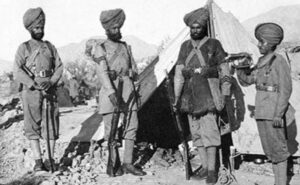
Sikhs Serving in the British Indian Army
Another remarkable aspect of Maharaja Duleep Singh’s communication with the Czar was his reference to Punjab’s economic importance. Punjab’s annual revenue at that time was estimated at nearly three crore rupees, which the Maharaja reportedly offered in return for Russian assistance.
This reveals the extraordinary economic strength of Punjab during that period. Despite its smaller population compared to many provinces, Punjab contributed disproportionately to the revenue of British India. Agriculture, disciplined administration, military recruitment, and trade had made Punjab economically indispensable.
Much of this strength was inherited from the governance structure developed during the Sikh Empire. Under Maharaja Ranjit Singh, Lahore had emerged as a centre of administration, commerce, military organization, and interfaith coexistence. The Sikh Empire protected not only Sikhs but also Hindus and Muslims. Temples were restored, mosques preserved, and repeated invasions from the northwest were halted.
Yet after the collapse of the Sikh Empire, Sikh political unity weakened rapidly.
Since the first General Elections of 1952 to the Punjab Vidhan Sabha and Parliament, a large number of Sikh leaders have been elected to the Punjab Assembly, Lok Sabha, and Rajya Sabha. Many among them have also occupied the highest religious and political positions, including Jathedar of Sri Akal Takhat Sahib, President of the Shiromani Akali Dal, and President of the Shiromani Gurdwara Parbandhak Committee.
Several leaders changed political parties and ideological positions according to personal interests and political convenience. Yet an uncomfortable question remains unanswered: how many of them sincerely raised, in the august Houses of Parliament or the Punjab Assembly, the very issues for which Sikh sentiments were repeatedly mobilized during elections? How often were concerns relating to Sikh identity, preservation of heritage, demographic imbalance, drug addiction, migration of youth, justice for historical grievances, or protection of Punjabi language and culture converted into sustained national policy debates?
Too often, emotional slogans became election agendas, but after victory the core concerns of the Sikh community remained unresolved.
Post Partition Scenario
The demographic changes after Partition raise another important historical question. Before 1947, Sikhs were spread across large parts of undivided Punjab — Lahore, Rawalpindi, Sheikhupura, Lyallpur, Multan, Hazara, and Nankana Sahib. After Partition, the Sikh population in West Punjab almost disappeared.
A serious academic inquiry is required to understand whether Sikhs merely migrated during Partition or whether large numbers were also compelled, pressured, or induced to convert over generations in territories that became Pakistan. Entire Sikh and Hindu cultural landscapes vanished from regions where they had flourished for centuries. The Sikh population in India was 6,862,283 according to the 1951 Census. Maharaja Duleep Singh wrote of 80 lakh Sikhs in 1887. In the 64 years since 1887, instead of increasing, the numbers had even declined.
Equally troubling is the silence of much of the post-independence Sikh leadership on fundamental Sikh concerns. A large number of Sikh leaders entered Parliament, occupied ministerial positions, and controlled major religious institutions, yet preservation of Sikh heritage remained neglected.
Even incidents relating to the sanctity and security of Guru Granth Sahib have deeply disturbed Sikh society in recent years. Yet institutional responses often appear driven more by political calculations than by spiritual responsibility.
The greater concern is that Sikh institutions increasingly appear preoccupied with management, elections, and financial control rather than the mission of Gurbani and the moral vision of Guru Nanak Dev Ji.
Concluding Remarks
Guru Nanak did not create a community merely to manage shrines. He created a spiritual civilization rooted in truth, justice, courage, discipline, and service to humanity. The Sikh Gurus sacrificed their lives not for institutional authority but for the protection of human dignity and religious freedom.
The decline after the fall of the Sikh Empire therefore occurred in two stages. The first was territorial and military defeat after 1849. The second, and perhaps more dangerous, was intellectual and political disintegration.
The lessons of Maharaja Duleep Singh’s letter remain relevant even today. A society may possess courage, economic strength, military contribution, and a glorious history, but without unity, vision, and committed leadership, even great civilizations become vulnerable.
The Sikh intelligentsia, if it truly wishes to serve the future, must rise above factional politics and emotional slogans. It must honestly examine why the community that once ruled from the Khyber to Tibet gradually lost political confidence within its own homeland. Why did betrayal repeatedly overpower sacrifice? Why did Sikh leadership fail to evolve a long-term civilizational strategy after the death of Maharaja Ranjit Singh?
Maharaja Duleep Singh’s 1887 letter should become part of serious historical and academic discourse. It is not merely a diplomatic document. It is a mirror reflecting the political condition of India, the economic importance of Punjab, the military role of the Sikhs, and the tragic fragmentation that followed the loss of sovereignty.
The British intercepted the Maharaja’s communication because they feared the symbolic and political power still attached to his name. Even in exile, he represented unfinished resistance.
Today, that forgotten letter asks difficult questions of Sikh society and India alike. History does not survive through emotion alone. It survives through memory, unity, scholarship, and moral courage.
The real question before the Sikh community today is not whether the Sikhs once ruled under Maharaja Ranjit Singh. The real question is whether the spirit that created that empire — sacrifice, discipline, justice, courage, and collective vision — still survives.
(The author is former Chairman, National Commission for Minorities, Government of India)