Dr Iqbal Singh Lalpura, IPS (Retd.)

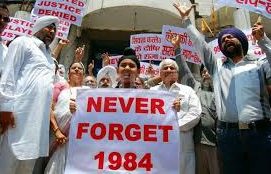
Every year, October 31 brings back painful memories of the events of 1984, opening a Pandora’s box of unanswered questions, political betrayal and the brutal killings of innocent Sikhs in Delhi and nine other states. Four decades have passed, but the wounds remain unhealed, and the quest for truth and justice continues.
The assassination of Smt. Indira Gandhi was undoubtedly a grave national tragedy. However, the killing of a Prime Minister could never justify the organised massacre of innocent citizens belonging to a particular community. Leaders and heads of government have been assassinated in other parts of the world, but the collective punishment of an entire community for the crime of a few individuals represents a grave failure of the State and its constitutional obligations.
According to the findings of the Justice Nanavati Commission and the records examined during subsequent inquiries, thousands of Sikhs were killed during the violence that followed Indira Gandhi’s assassination. More than 3,000 Sikhs lost their lives, with Delhi suffering the greatest devastation. The full extent of the injuries, destruction of property and human suffering could not be adequately documented, particularly because timely and effective measures to maintain law and order, protect vulnerable citizens and provide relief were not taken.
The most disturbing questions concern the failure of the administration to prevent the violence, the alleged involvement of political functionaries, and the prolonged denial of justice to the victims. The reported statement attributed to Rajiv Gandhi after his mother’s assassination, comparing the earth shaking when a large tree falls, became a symbol of the insensitivity with which the massacre was perceived by many victims. No political explanation can justify the failure to protect innocent lives.
Having witnessed the events leading to Operation Blue Star in June 1984, not as a silent spectator but as an active police officer involved in sensitive operations and crime control, I have long held serious questions about the intentions and actions of the Government of the day. My experience in Punjab’s sensitive border areas between 1977 and 1997 compels me to examine these events not merely as a political controversy, but as a tragedy with profound consequences for national unity, Sikh confidence and India’s constitutional values.
Over the years, numerous books and accounts have been published by witnesses, Army officers, police officers, bureaucrats and journalists. The writings of Shri G.B.S. Sidhu, IPS, Shri M.K. Dhar, IPS, and Shri B.N. Pandey, former Governor of Punjab, deserve particular attention. Their accounts raise serious questions about the extent to which the Central Government understood the developing situation in Punjab and whether political considerations influenced the handling of the crisis. These accounts must be examined critically, alongside documentary evidence, to establish the truth and identify responsibility.
My questions begin well before October 1984. Why was a revision petition not filed in connection with the 1978 clash between the Nirankari group and Sikhs in Amritsar? Why, despite alleged evidence concerning the supply of weapons in the case involving Gurbachan Singh, the Nirankari leader, were the relevant questions of accountability not pursued with the urgency they demanded? Why was an accused person, against whom serious allegations had been made, reportedly allowed to surrender after seven days, despite warrants being available with the police? Why was he released after approximately 25 days without a trial, particularly when more than eleven people had been killed in the aftermath of his arrest? These questions deserve examination through the available records and the testimony of those who witnessed the events.
Since the 1970s, incidents of sacrilege involving Sri Guru Granth Sahib Ji have repeatedly hurt Sikh religious sentiments in Punjab, where Sikhs form the majority of the population. The failure to ensure timely investigations, effective prosecutions and public confidence in justice has deepened mistrust. The consequences of administrative inaction and political expediency cannot be understood in isolation from the wider crisis that developed in Punjab during the 1980s.
A particularly disturbing aspect was the alleged political cultivation of religious divisions within the Sikh community. There have long been questions about the role of political intermediaries in encouraging factions and promoting individuals who could be used against the moderate Akali leadership. The then Union Home Minister, a Sikh leader based in Delhi, was alleged to have supported competing factions and facilitated the mobilisation of crowds, reportedly through a youth leader, to project the popularity of a Sikh preacher. If political patronage was extended to weaken established Sikh leadership for electoral or partisan advantage, those responsible must be identified through credible evidence. Religious faith must never become an instrument of political manipulation.
The tragedy was not merely the betrayal of Sikhs by those in power; it was also a failure of leadership within the Sikh community. At critical moments, sections of Sikh leadership did not take a sufficiently firm, united and timely stand when developments were clearly moving against Sikh interests. Personal ambitions, factional rivalries and political calculations weakened collective action. Instead of insisting consistently on justice, accountability and the protection of religious institutions, some leaders became entangled in political arrangements that ultimately proved damaging to the community.
This failure must be acknowledged honestly. A community that has made extraordinary sacrifices for religious freedom, justice and national security cannot afford leadership that places personal or partisan interests above its collective welfare. The lesson is not to blame the entire Sikh leadership indiscriminately, but to distinguish those who stood firm from those who compromised, remained silent or allowed themselves to be used by others.
The betrayal continued after the massacre. The Rajiv–Longowal Accord of 1985 was presented as a historic opportunity for lasting peace and reconciliation. Yet the commitment concerning the transfer of Chandigarh to Punjab was not fulfilled within the promised period. The failure to implement important commitments further damaged trust and reinforced the feeling among many Sikhs that assurances made during a crisis were subsequently abandoned when political circumstances changed.
The response of the Bharatiya Janata Party (BJP) to the massacre stands in contrast to this record. Shri Atal Bihari Vajpayee took a firm stand against the killings and appeared as a witness in the proceedings concerning the violence. The BJP’s position came at a time when speaking openly against the massacre carried significant political consequences. The party’s electoral fortunes suffered in the 1984–85 period, but its stand demonstrated that justice for the victims could not be subordinated to electoral calculations.
When Shri Atal Bihari Vajpayee became Prime Minister in 1998, his government initiated a commission of inquiry into the massacre. The objective was to examine the events, address the grievances of the victims and advance the process of accountability. The Justice Nanavati Commission subsequently completed its inquiry under the Congress-led Government of Dr Manmohan Singh. However, the implementation of its recommendations, including the provision of employment to eligible family members of victims, did not proceed with the urgency and determination that justice demanded. The dilution of the recommendation from a direction that jobs must be provided to a formulation that they may be provided reflected a weakening of the commitment to rehabilitation.
The situation changed under the Government led by Shri Narendra Modi. Compensation of ₹5 lakh was provided to the families of those killed, and a Special Investigation Team was constituted to investigate criminal cases relating to the massacre. These steps renewed the hope of victims who had waited for decades for recognition, relief and justice. The BJP’s intervention did not erase the past, nor did it settle every question of accountability, but it applied a healing balm to long-neglected wounds and reopened avenues for pursuing justice.
The role of the National Commission for Minorities also requires honest assessment. For many years, its response to the suffering of the victims was inadequate. During my tenure as its Chairman, I sought to ensure that the pending issue of employment for eligible members of affected families received attention. The recommendation concerning jobs began to be implemented from 2024 onwards, and the process has continued. The victims deserved this support much earlier. Nevertheless, delayed action is preferable to continued neglect, and the experience demonstrates the importance of institutions fulfilling their constitutional and moral responsibilities.
The Sikh community has a glorious history of sacrifice for religious freedom and human dignity. The martyrdom of Sri Guru Tegh Bahadur Ji in 1675 remains an unparalleled testament to the defence of the right to practise one’s faith. Sikhs made remarkable contributions to India’s freedom struggle and have continued to serve the nation in its defence, agriculture, industry and public life. The events of 1984 were therefore not simply an attack on individual citizens; they struck at the confidence of a community whose contribution to India’s national life is immense.
Forty-two years after the massacre, the time has come to move beyond selective remembrance and political slogans. The Sikh community must examine the truth about what happened, identify those who planned, enabled or participated in the violence, and distinguish genuine friends from those who exploited Sikh sentiments for political gain. Equally important is an honest assessment of the failures within Sikh leadership that allowed divisions and political manipulation to weaken the community at critical moments.

The Unanswered Questions for Sikh Political and Religious Leadership
While the role of successive governments and political parties in the tragedy of 1984 must be examined, Sikh political and religious leadership cannot escape its own responsibility. Forty-two years have passed since the massacre, yet several fundamental questions remain unanswered.
Why was no independent Sikh Enquiry Committee established to systematically document the killings, identify the victims, preserve evidence, examine administrative failures and pursue accountability? Why did Sikh religious institutions and political organisations fail to sustain a coordinated, long-term effort to ensure justice for every affected family? The community deserved an institution that would have preserved the truth beyond political changes and electoral calculations.
Why have Sikh leaders not consistently visited the affected families personally, particularly those who continue to struggle for relief, rehabilitation and recognition? Justice cannot be reduced to annual commemorations, speeches and resolutions. It requires direct engagement with victims, an understanding of their continuing hardships and sustained efforts to secure their legitimate rights. Those who claim to represent the Panth must demonstrate that commitment through action, not merely words.
An equally important question concerns the future. Where is the comprehensive, long-term plan for the propagation of Sikhism, the dissemination of Gurbani, the strengthening of Sikh educational institutions and the development of Sikh youth? Where is the coordinated effort to prepare young Sikhs for excellence in education, science, technology, administration, the judiciary, the armed forces, industry and public service?
The future of Sikhism cannot depend solely on the management of Gurdwaras, the collection of offerings or the observance of anniversaries. It requires intellectual renewal, transparent religious institutions, quality education, employment opportunities, moral leadership and an atmosphere of peace in which young Sikhs can grow with confidence in their faith and their country. Sikh institutions must also reach out to young people who feel disconnected from their religious heritage and provide them with meaningful opportunities for learning, service and leadership.
Sikh political leadership must rise above factional rivalries and personal ambitions. Religious leadership must restore public confidence through accountability, transparency and a clear vision for the next generation. Both must recognise that their responsibility extends far beyond the pursuit of political office or institutional control.
The Sikh community has sacrificed immensely for the freedom, unity and integrity of India. Its future must not be held hostage to internal divisions, short-term political interests or the absence of a long-term vision. The time has come for Sikh leaders to answer these questions honestly, accept responsibility for past failures and present a credible programme for justice, religious renewal, education and youth empowerment.
The ultimate tribute to the victims of 1984 will not be paid by remembrance alone. It will be paid when every victim’s family receives justice, when Sikh institutions regain the confidence of the community, and when the younger generation inherits a peaceful, progressive and spiritually confident Sikh Panth.
Justice for the victims, accountability for the guilty, responsibility from Sikh leadership, and a long-term vision for the future must become the four pillars of Sikh .
The lesson of 1984 must be that no government, political party or community leader can be permitted to place power above human life, justice and constitutional responsibility. The guilty must be held accountable, the victims must receive their rightful relief, and future generations must learn how political betrayal and administrative failure can destroy lives and damage national unity.
Today, under the leadership of the Honourable Prime Minister, Shri Narendra Modi Ji, there is an opportunity to strengthen the bond between the Sikh community and the nation, restore confidence, protect Sikh religious heritage and enable Sikhs to regain their rightful place in every sphere of public life. The Sikh community should engage constructively with the Government while remaining firm in defending its religious, cultural and constitutional interests.
Remembering 1984 must not mean perpetuating hatred. It must mean pursuing truth, securing justice and ensuring that such a tragedy is never repeated. The sacrifices of the Sikhs, the betrayal they endured and the lessons of leadership failure must become the foundation for a more united, confident and forward-looking community.
Justice for the victims, accountability for the guilty, and unity for the future must remain our guiding principles.
(The Author is former Chairman, National commission for Minorities, Government of India)