Iqbal Singh
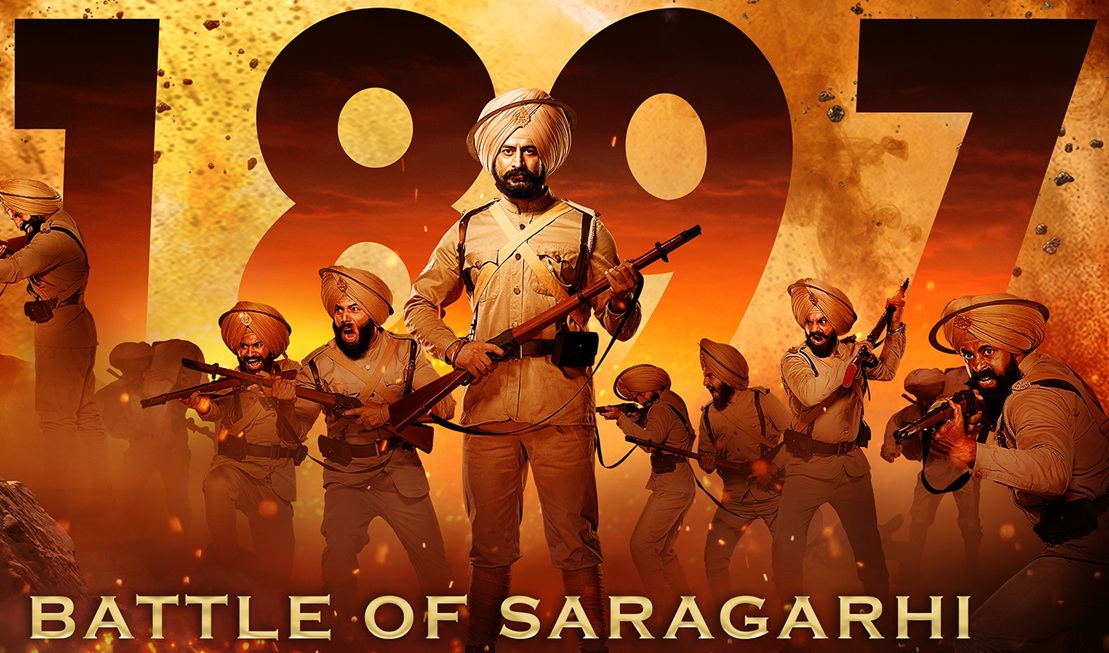
The Battle of Saragarhi, fought on 12 September 1897, is one of the most extraordinary examples of courage and sacrifice in military history. The 21 soldiers of the 36th Sikh Regiment, surrounded and vastly outnumbered, chose to fight to the last rather than surrender.
It was not only fascinating, but also one of the most remarkable battles in military history. Let us also step back and look at the bigger historical picture of this region. Saragarhi was once part of Maharaja Ranjit Singh’s Lahore Darbar, whose western frontier extended to Peshawar and the Khyber region. Their extraordinary bravery was duly recognised by the British and, over the years, Saragarhi has gained worldwide recognition as a symbol of valour and sacrifice.
These frontier territories had earlier been brought under the Lahore Darbar during the reign of Maharaja Ranjit Singh. Under his leadership, the Sikh Empire extended westward across a large part of the frontier adjoining Afghanistan, including Peshawar and the strategic Khyber region. By then, the Sikhs had already established a formidable reputation as warriors. So great was this reputation that in the frontier region, mothers would quieten unruly children by invoking the name of Sardar Hari Singh Nalwa and his men, a reflection of the fear, respect, and awe that his name and Sikhs commanded.
The Battle of Jamrud, fought near Peshawar in 1837, was one of the most significant battles of the Sikh Empire. It was in this battle that the legendary general, Hari Singh Nalwa, attained martyrdom while defending the western frontier. The Sikhs were vastly outnumbered, yet both sides claimed victory. The Sikhs retained the fort despite intense attacks and claimed victory, while the Afghan tribes claimed victory for having killed Hari Singh Nalwa. (Incidentally, the fort at Jamrud was held by my ancestor and his men, who fought under the overall command of Hari Singh Nalwa in this historic battle)
The death of Hari Singh Nalwa in 1837 was a major setback for Maharaja Ranjit Singh. Ranjit Singh himself died in 1839, but the Sikh Empire endured until its annexation by the British in 1849 after the Anglo-Sikh Wars. Thereafter, these frontier territories became part of British India.
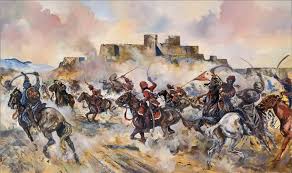
Saragarhi lies roughly 125 km from Jamrud, and the battle there took place about 60 years after Jamrud. By 1897, the reputation of the Sikhs as exceptionally courageous and dependable soldiers was already firmly established in the region.
There is thus a remarkable historical continuity between Jamrud and Saragarhi in the region.
At Jamrud in 1837, Sikh soldiers fought under the banner of the Sikh Empire while vastly outnumbered; at Saragarhi in 1897, Sikh soldiers fought under the British Indian Army under similar odds.
The flag and the political authority had changed, but the courage, discipline, sacrifice, and fighting spirit of the Sikh soldier remained unchanged.
Ultimately, it is not merely the flag under which these soldiers fought that should define their legacy. What matters is the extraordinary courage with which they performed their duty against overwhelming odds. The 21 defenders of Saragarhi demonstrated that spirit to an exceptional degree, just as generations of Sikh soldiers had done before them.
And that tradition did not end with Independence. Sikh soldiers have continued to demonstrate the same courage, professionalism, discipline, and willingness to make the supreme sacrifice in the service of India.
From the battlefields of Guru Gobind Singh Ji and Banda Singh Bahadur, through the Misl era and the Sikh Empire, to Saragarhi, the two World Wars, and the post-Independence Indian Army, this remarkable tradition of Sikh military valour has endured.
It is also important to remember that if Peshawar is in Pakistan today, it is because the region became part of British India in 1849 following the British victory over the Sikh Empire in the Second Anglo-Sikh War. The Sikhs had conquered and incorporated Peshawar and the surrounding region into the Lahore Darbar, and it remained under Sikh rule until the defeat of the Sikh Empire and its annexation by the British.